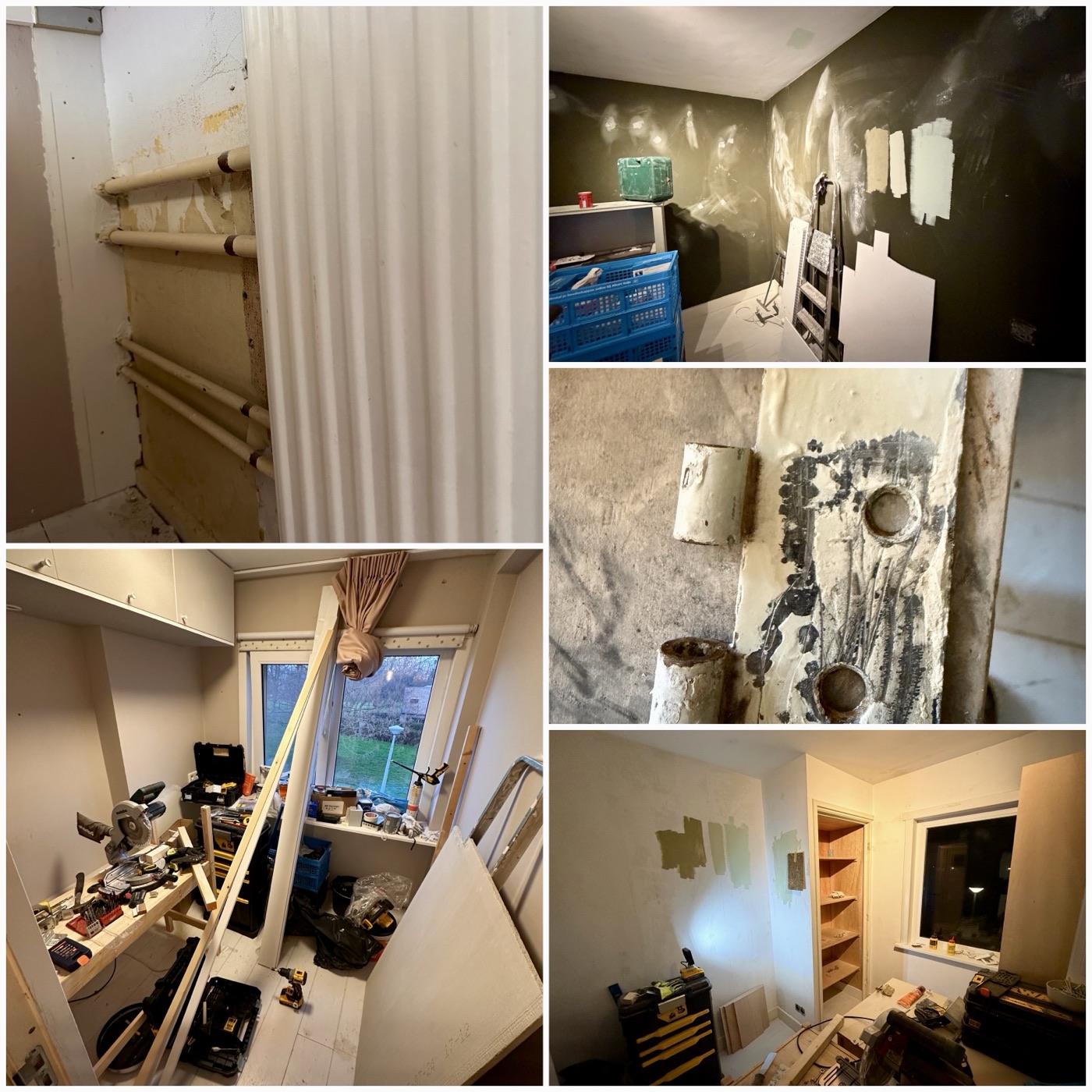
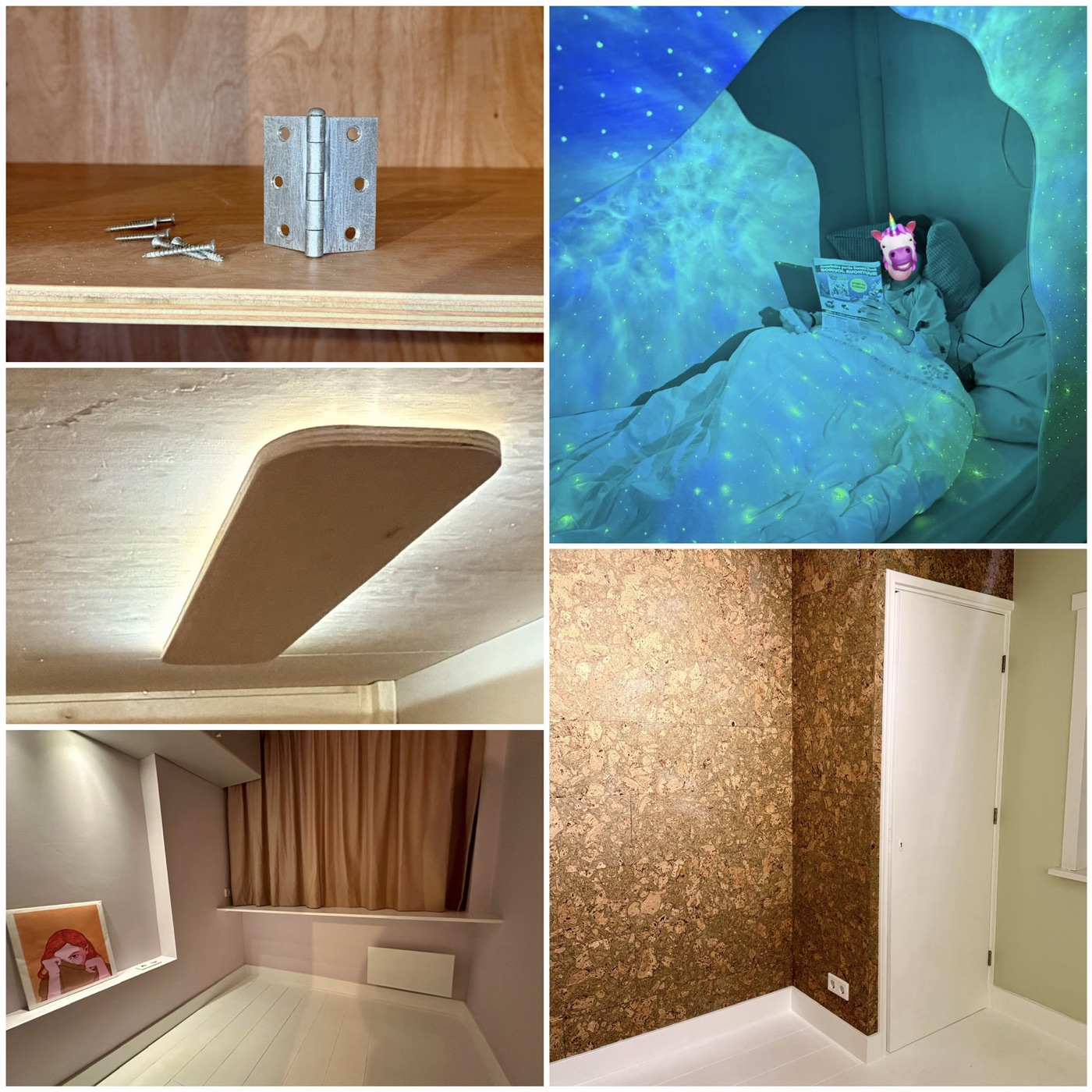
So I got to work on the house. The kids' rooms were completely overhauled: water pipes that had always run along the walls disappeared under the floor, a rickety sliding door made way for a regular hinged door, and the original 1950s built-in closet was restored instead of demolished. Add to that plastering, painting wood and walls, electrical work, and ripping out all the old-fashioned radiators, replaced by new electric ones, including the wiring for them. And in between, repairs of just about everything a house can possibly come up with. Oh, and I also nearly sawed through a water pipe for the second time, one I was absolutely sure was an unused heating pipe.
Meanwhile, I'm back at work: I've started as Product Owner for the Sovereign Cloud and Sovereign AI propositions at Atos. What's mostly on my mind now: how often, while renovating, I thought 'hey, this is just like my job, but with a mitre saw'.
The loft bed, or: why the beginning looks like nothing
The best example is the loft bed I built for my daughter. It became a truly iterative process: measure, make a first setup, discover it had to be different, adjust, start again. The end result, by the way, turned out rock-solid and clean. I'm genuinely proud of it.
But the beginning? The beginning was slow and didn't capture anyone's imagination. A frame that looks like nothing, endless fitting and adjusting with two beams. Try explaining that to a daughter who just wants her bed. And yet: without that slow, now invisible beginning, it would never have turned out this well.
Every Product Owner knows this. The first weeks of a new product or proposition produce nothing you can show. You're investigating, laying groundwork, talking to people. Stakeholders get restless: where are the results? But skip the foundation and you build a wobbly bed. Literally and figuratively.
Painting a floor while people live on it
My personal favourite: painting a floor on a storey where daily life simply continues. So you go plank by plank. Cordon off a section, paint, let it dry, shift the furniture, next section.
Anyone who has ever replaced a system that had to keep running in the meantime knows exactly what this feels like. You can't do everything at once. You deliver in small steps, you keep the house liveable, and you accept that it takes longer than if you could have done it all in one go. The alternative, doing everything at once and hoping for the best, ends with paint footprints all through the house.
Same thinking, different tools
What I'm mostly taking away from these months: understand the problem before you start tinkering, choose the right tools, know when to call in a professional, and accept that 'just putting up a shelf' rarely stays just that one shelf. Whoever renovates a house and whoever builds a product is, at the core, doing the same work.
And now, with clean hands and a refurbished house, I get to apply that thinking to cloud and AI with sovereignty at its core. No water pipes this time. Although with projects like these, you never know for sure.